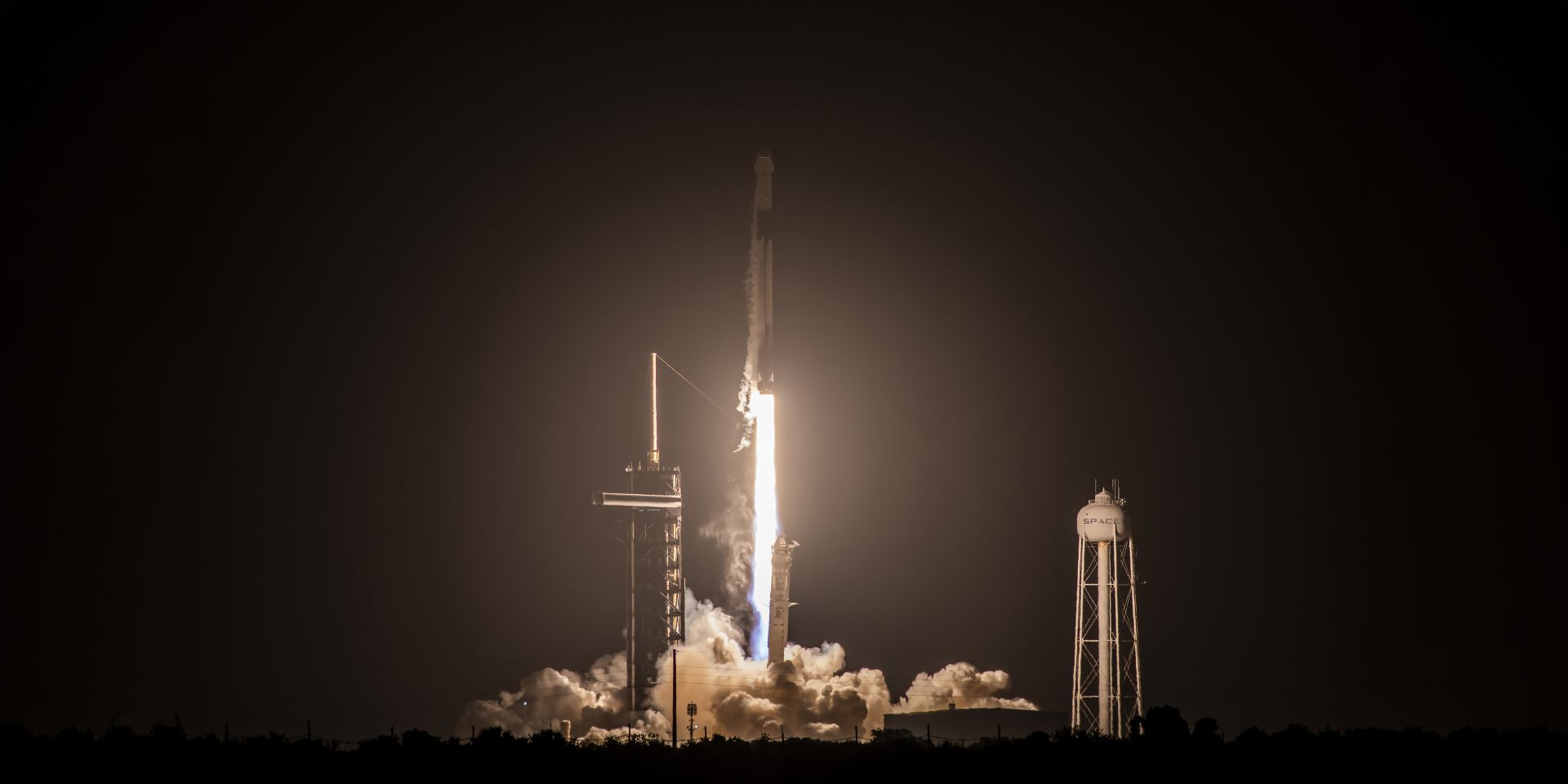
The SpaceX Falcon 9 rocket carrying the Dragon spacecraft lifted off from Launch Complex 39A at NASA’s Kennedy Space Center in Florida on Monday, April 21, 2025, to the ISS. Dragon delivered a variety of science experiments, including novel radiation detection instrumentation. (Photo: NASA)
The predawn darkness on a cool Florida night was shattered by the ignition of nine Merlin engines on a SpaceX Falcon 9 rocket. The thrust of the engines shook the ground miles away. From a distance, the rocket appeared to slowly rise above the horizon. For the cargo onboard, the launch was anything but gentle, as the ignition of liquid oxygen generated more than 1.5 million pounds of force. After the rocket had been out of sight for several minutes, the booster dramatically returned to Earth with several sonic booms in a captivating show of engineering designed to make space travel less expensive and more sustainable.
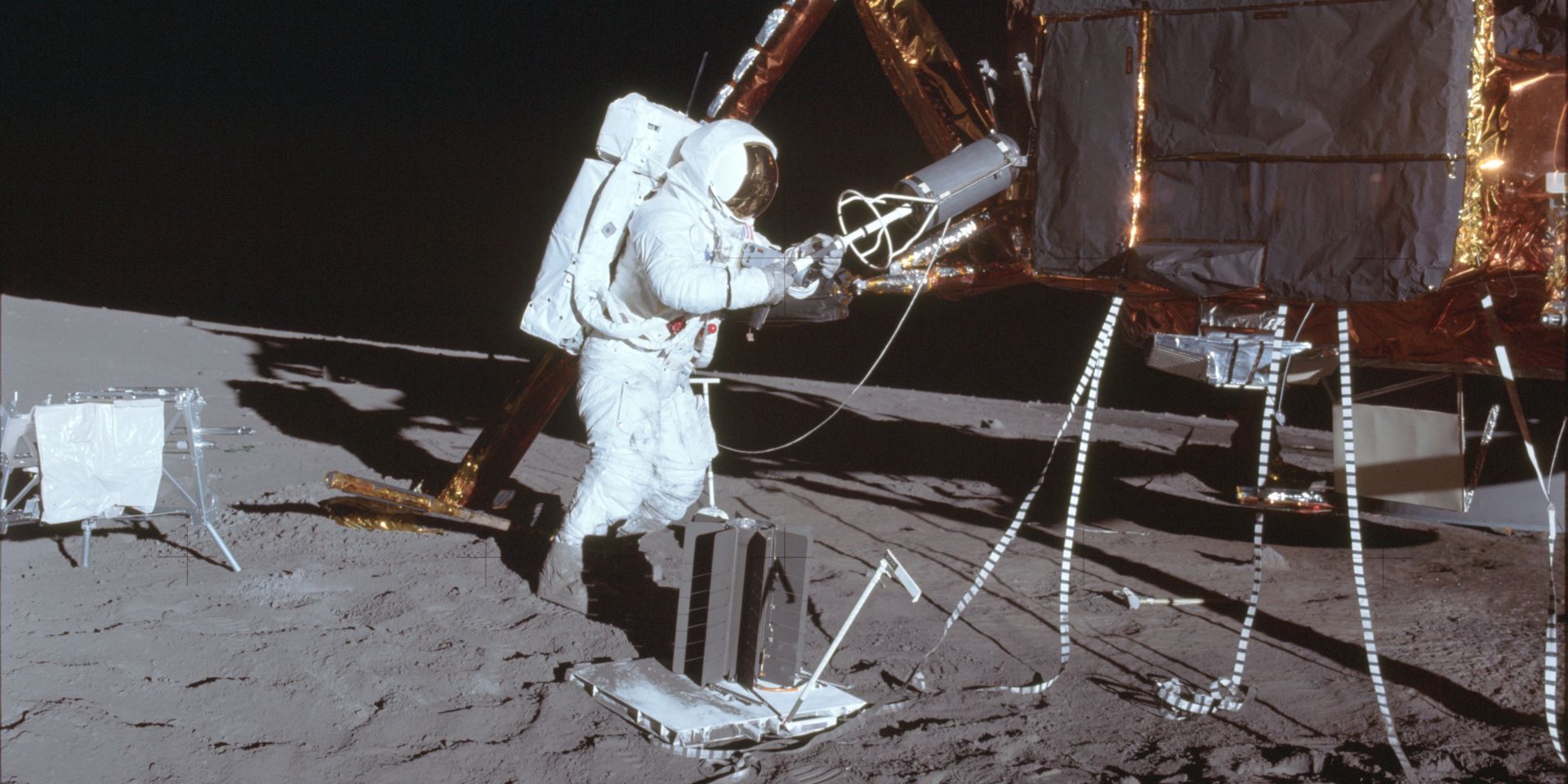
April 26, 2024, 3:03PMNuclear NewsAlex Gilbert, Harsh S. Desai, and Jake Matthews Astronaut Alan Bean prepares fueling of a Pu-238 radioisotope thermoelectric generator during the Apollo 12 mission to the lunar surface. (Photo: NASA)
In early 2006, a start-up company launched a small rocket from a tiny island in the Pacific. It exploded, showering the island with debris. A year later, a second launch attempt sent a rocket to space but failed to make orbit, burning up in the atmosphere. Another year brought a third attempt—and a third failure. The following month, in September 2008, the company used the last of its funds to launch a fourth rocket. It reached orbit, making history as the first privately funded liquid-fueled rocket to do so.
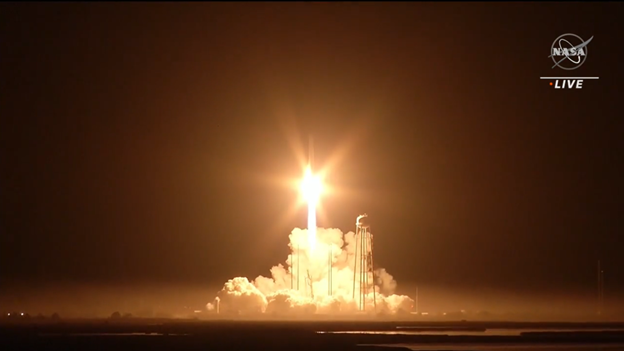
A Northrop Grumman Antares rocket, with the Cygnus spacecraft Sally Ride aboard (so named for first American woman to fly in space), launched at 5:32 a.m. EST on November 7, from NASA's Wallops Flight Facility in Virginia. The rocket is captured just after liftoff in this still image from NASA’s live broadcast of the event.
Seeds from the joint laboratories of the International Atomic Energy Agency and the Food and Agriculture Organization of the United Nations (FAO) are onboard a Cygnus spacecraft launched from NASA’s Wallops Flight Facility in Virginia early on November 7. Now orbiting the Earth en route to the International Space Station, the seeds are part of a commercial resupply mission with a payload that includes resources to support more than 250 scientific investigations.


 The International Atomic Energy Agency is